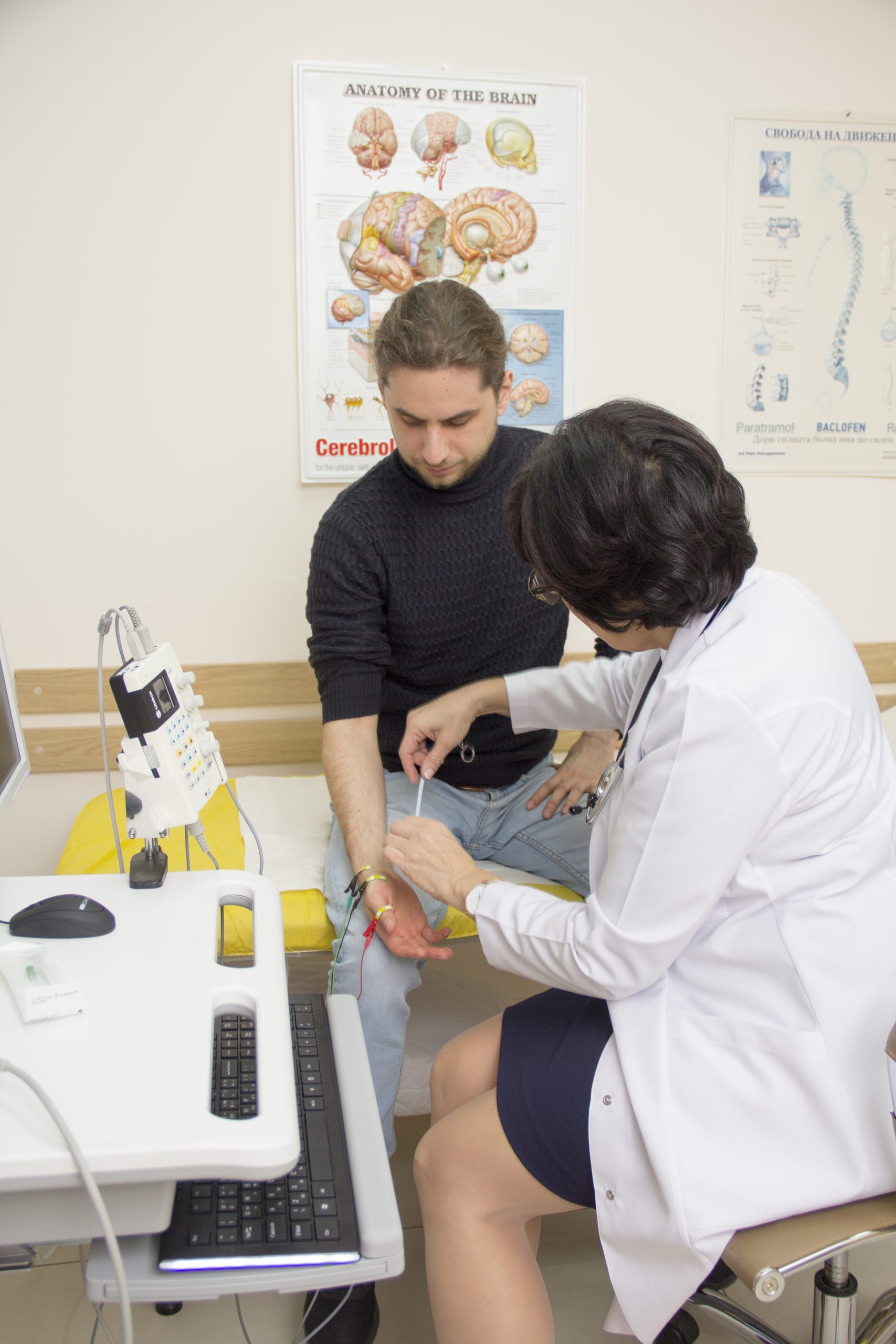
WHAT IS ELECTROMYOGRAPHY (EMG)
Electromyography (EMG) is a diagnostic procedure that evaluates the health condition of muscles and the nerve cells that control them. These nerve cells are known as motor neurons. They transmit electrical signals that cause muscles to contract and relax.
EMG results can help the doctor diagnose muscle disorders, nerve disorders, and disorders affecting the connection between nerves and muscles.
WHY IS ELECTROMYOGRAPHY PERFORMED
Your doctor may perform an EMG if you’re experiencing symptoms that may indicate a muscle or nerve disorder. Some symptoms that may call for an EMG include:
- Tingling
- Numbness
- Muscle weakness
- Muscle pain or cramping
- Paralysis
- Involuntary muscle twitching (or tics)
The results of an EMG can help your doctor determine the underlying cause of these symptoms.
POSSIBLE CAUSES OF COMPLAINTS ARE:
- Muscle disorders, such as muscular dystrophy
- Disorders that affect the ability of the motor neuron to send electrical signals to the muscle, such as myasthenia gravis
- Radiculopathies
- Peripheral nerve disorders that affect the nerves outside the spinal cord, such as carpal tunnel syndrome
- Nerve disorders, such as amyotrophic lateral sclerosis (ALS)
Preperation
HOW DO I PREPARE FOR ELECTROMYOGRAPHY:
Make sure to notify your doctor about any over-the-counter or prescription medications you may be taking. It’s also important to tell your doctor if you have a bleeding disorder, or if you have a pacemaker or implantable defibrillator. You may not be able to have an EMG if you have any of these medical conditions or devices.
Bathe or take a shower to remove any oils from the skin. Don’t apply any lotions or creams after washing.
Wear comfortable clothing that doesn’t obstruct the area that your doctor will be evaluating.
WHAT HAPPENS DURING AN ELECTROMYOGRAPHY
You will be asked to lie down on an examination table or to sit in a reclined chair. Your doctor may ask you to move into different positions during the procedure.
There are two components of an EMG test: the nerve conduction study and needle EMG. The nerve conduction study is the first part of the procedure. It involves placing small sensors called surface electrodes on the skin to assess the ability of the motor neurons to send electrical signals. The second part of the EMG procedure, known as needle EMG, also uses sensors to evaluate electrical signals. The sensors are called needle electrodes, and they’re directly inserted into muscle tissue to evaluate muscle activity when at rest and when contracted.
The nerve conduction study is performed first. During this portion of the procedure, your doctor will apply several electrodes to the surface of your skin, usually in the area where you’re experiencing symptoms. These electrodes will evaluate how well your motor neurons communicate with your muscles. Once the test is complete, the electrodes are removed from the skin.
After the nerve conduction study, your doctor will perform the needle EMG. Your doctor will first clean the affected area with an antiseptic. Then, they will use a needle to insert electrodes into your muscle tissue. You may feel slight discomfort or pain while the needle is being inserted.
The needle electrodes will evaluate the electrical activity of your muscles when contracted and when at rest. These electrodes will be removed after the test is over.
The duration of the EMG study is between 30 and 60 min.
WHAT ARE THE RISKS OF ELECTROMYOGRAPHY?
An EMG is a very low-risk exam. However, you may feel sore in the area that was tested. The soreness may last for a few days and can be relieved with an over-the-counter pain reliever, such as ibuprofen.
In rare cases, you may experience tingling, bruising, and swelling at the needle insertion sites. Make sure to tell your doctor if the swelling or pain becomes worse.
RESULTS
Your doctor may review the results with you right after the procedure. However, if another healthcare provider ordered the EMG, then you may not know the results until you attend a follow-up appointment with your doctor.
Depending on your results, your doctor will talk to you about any additional tests or treatments that might be needed.